Processing Methods
After the harvest, how the cherry is processed defines much of what you taste in the cup. Each method takes fermentation and drying down a different path, and the same bean can end up tasting completely different.
Honey
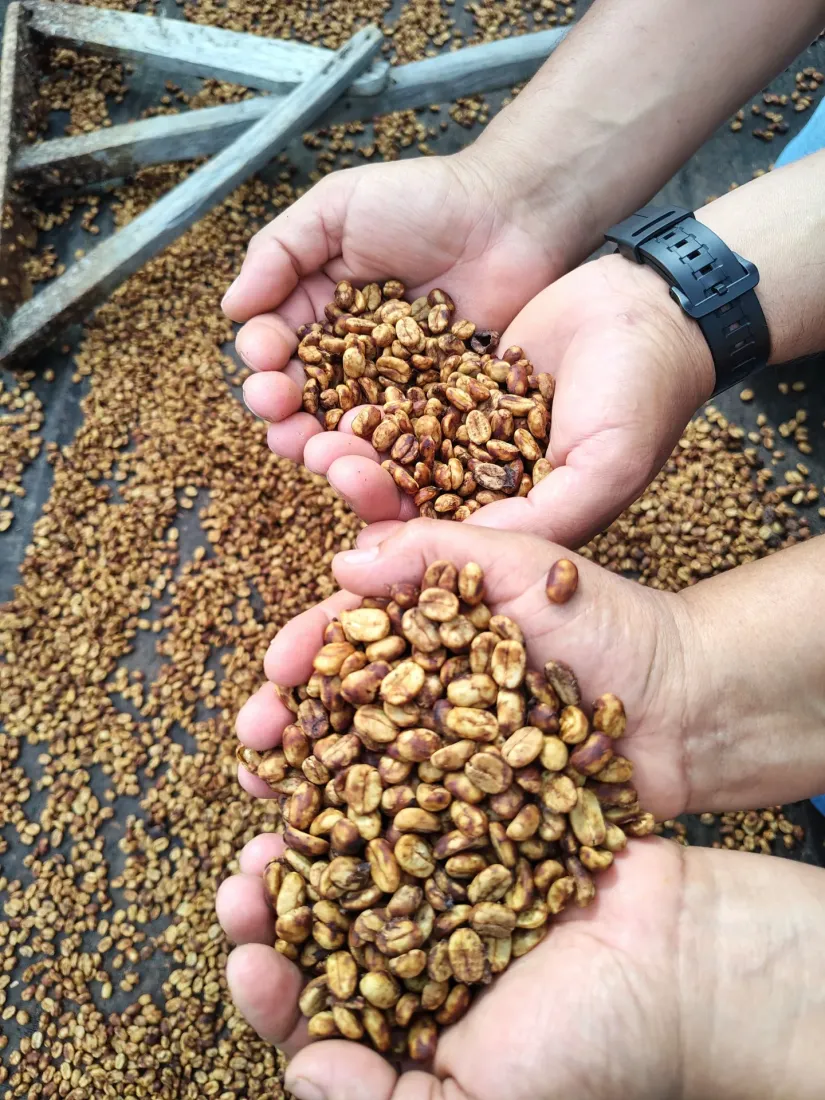
The honey process removes the cherry's skin but keeps the sticky fruit layer, the mucilage, on the bean while it dries, skipping the washing tank entirely. That layer looks and feels like honey, which is where the name comes from, and as it dries onto the bean it adds sweetness and body.
Depending on how much of that layer is kept, the lot is graded as white, yellow, red or black honey: the more mucilage and the slower and shadier the drying, the darker the dried bean and the deeper the sweetness. It sits right between the cleanliness of a washed coffee and the sweetness of a natural.
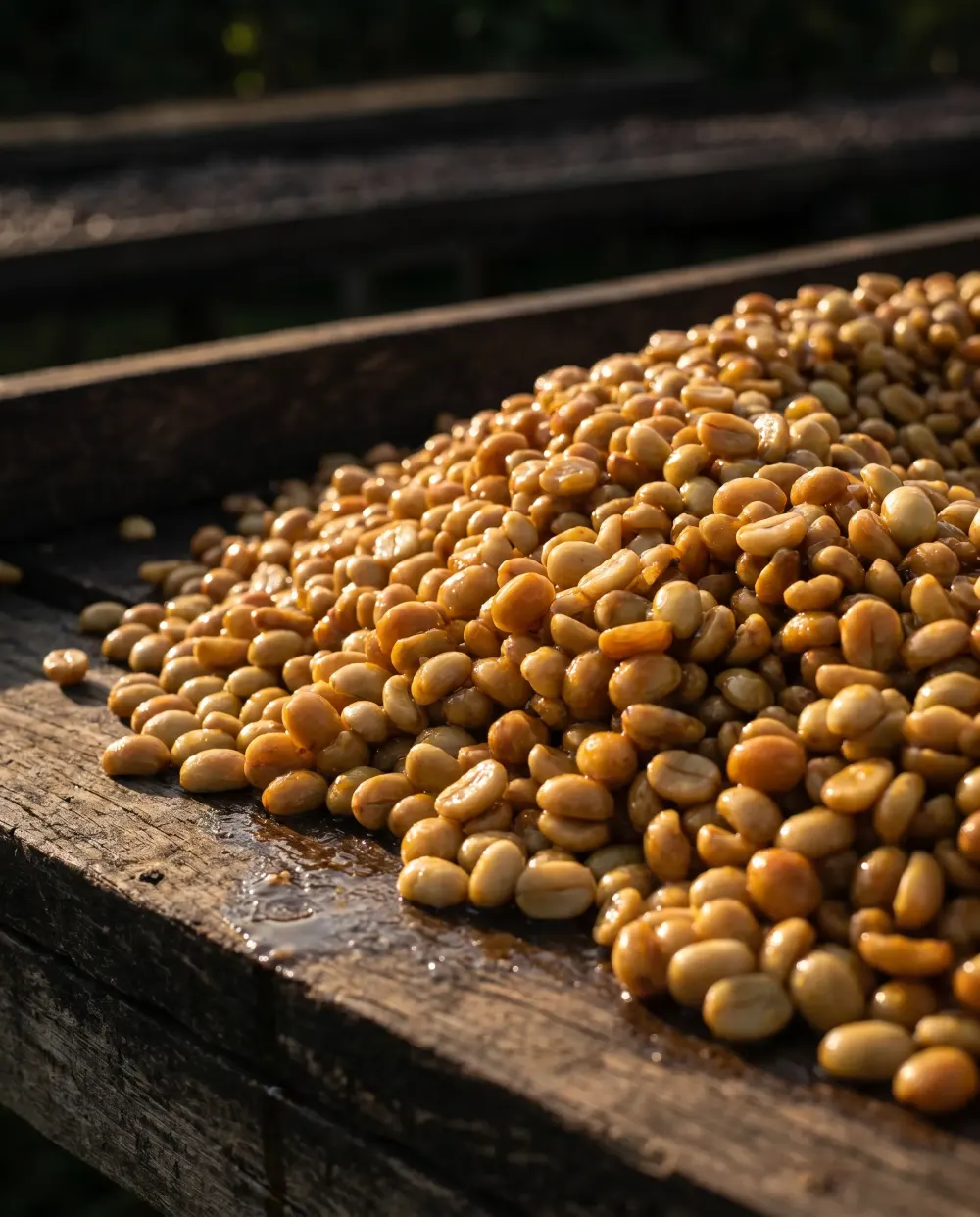 01
01The cherry is depulped, but the sugary mucilage stays bonded to the bean.
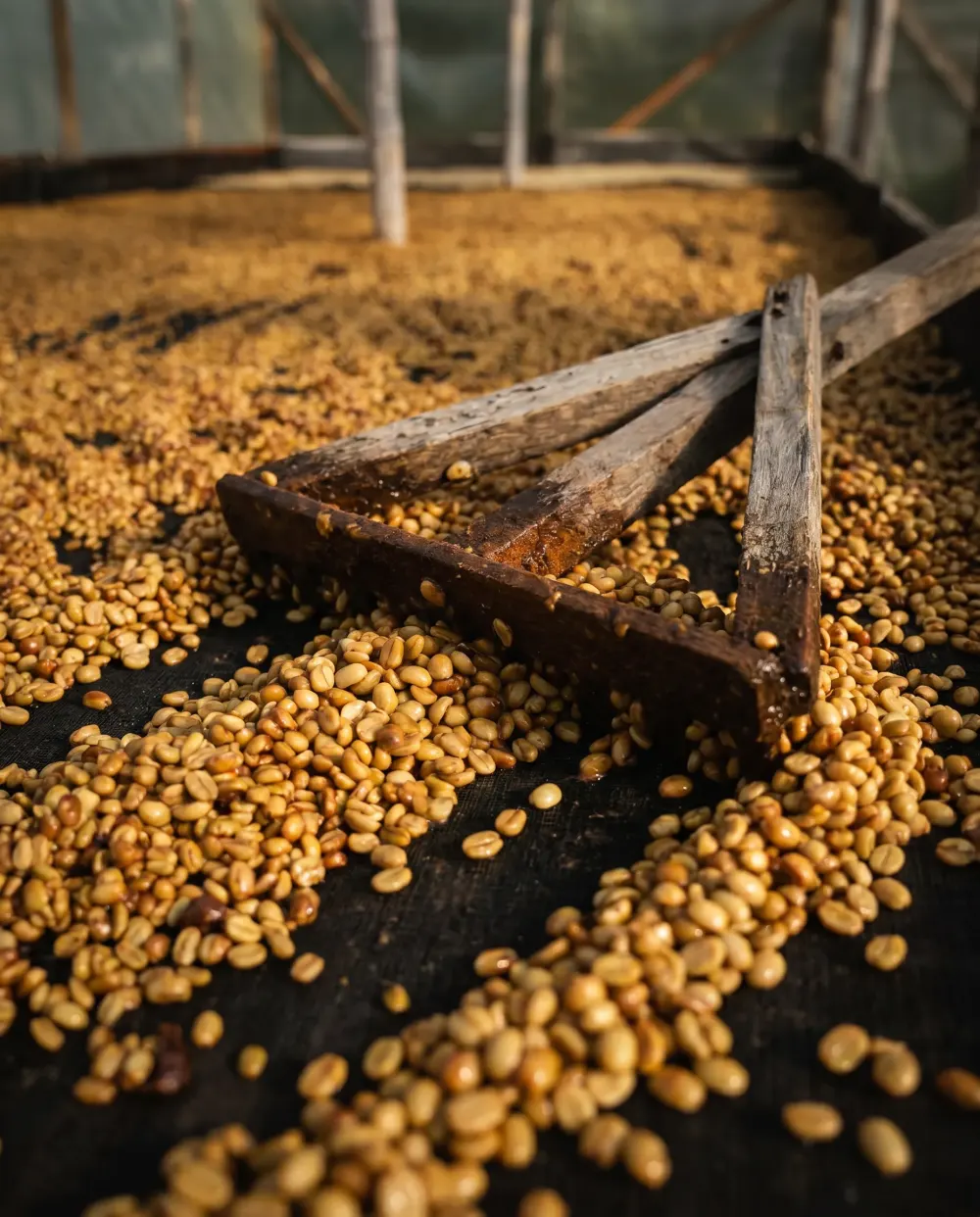 02
02The honey-like layer dries slowly with the bean on beds or patios, lending sweetness and body.
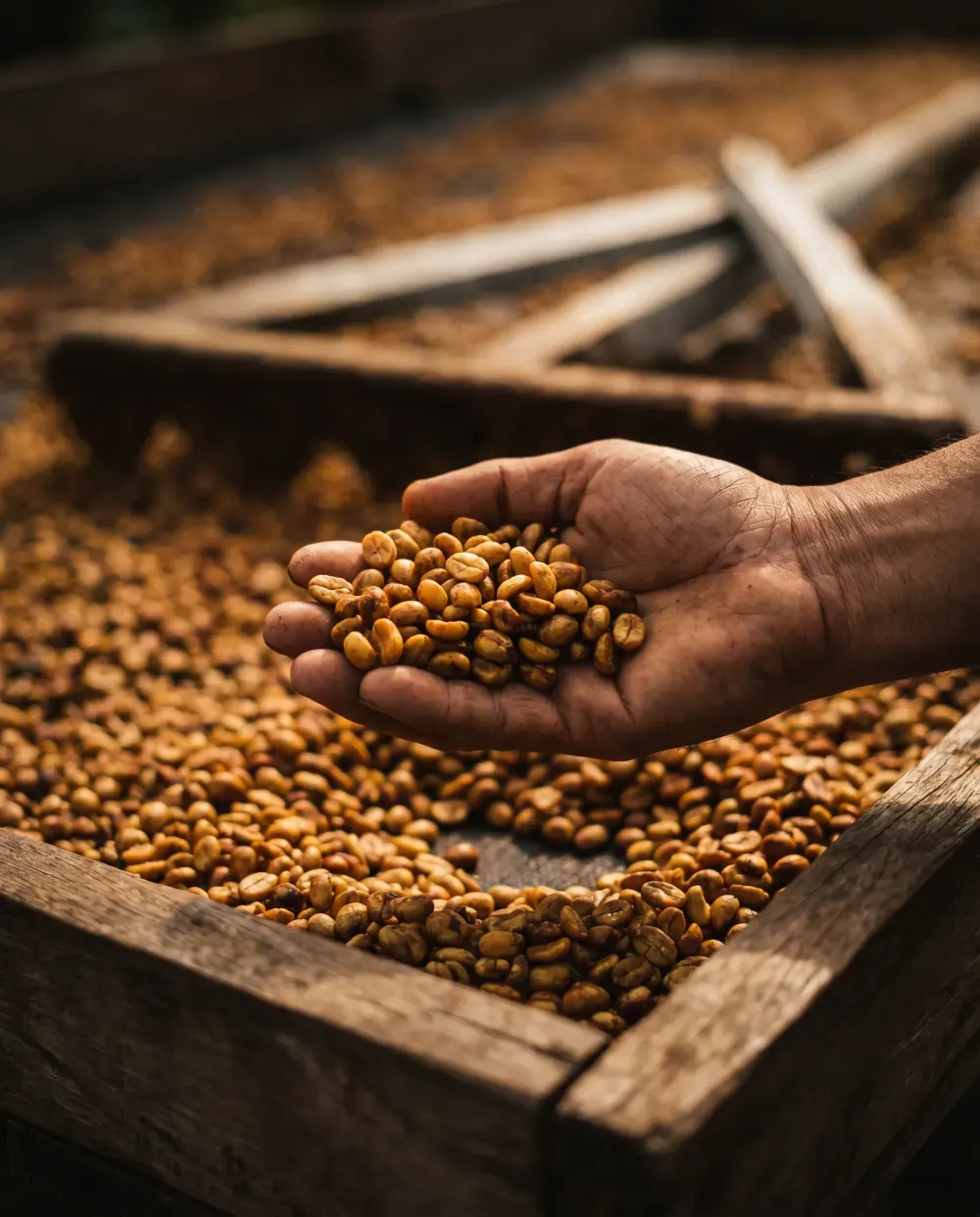 03
03Depending on the mucilage retained, the lot is graded white, yellow, red or black honey.
Washed
In the washed process, the ripe cherry goes through a depulper that removes the skin, leaving the bean coated in mucilage, a sticky, sugary layer of fruit. The coffee then rests in fermentation tanks, traditionally for 18 to 24 hours in Colombia, while natural microorganisms break down that mucilage under careful time and temperature control.
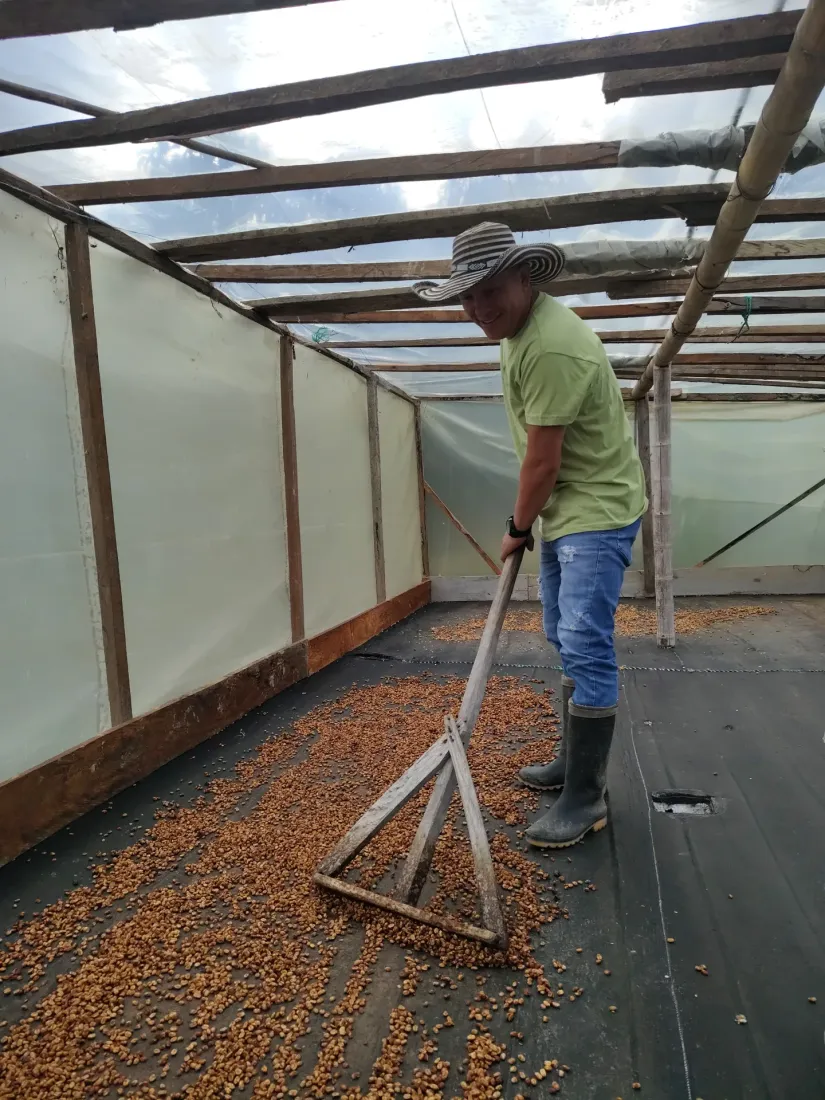
The beans are then washed in water channels, where the dense, healthy beans sink and the lighter ones float away, and dried slowly in a marquesina, a greenhouse-like solar dryer, until they hold just 10 to 12% moisture. The result is a crisp, bright cup with lively acidity, where you can clearly taste the variety and the place it was grown.
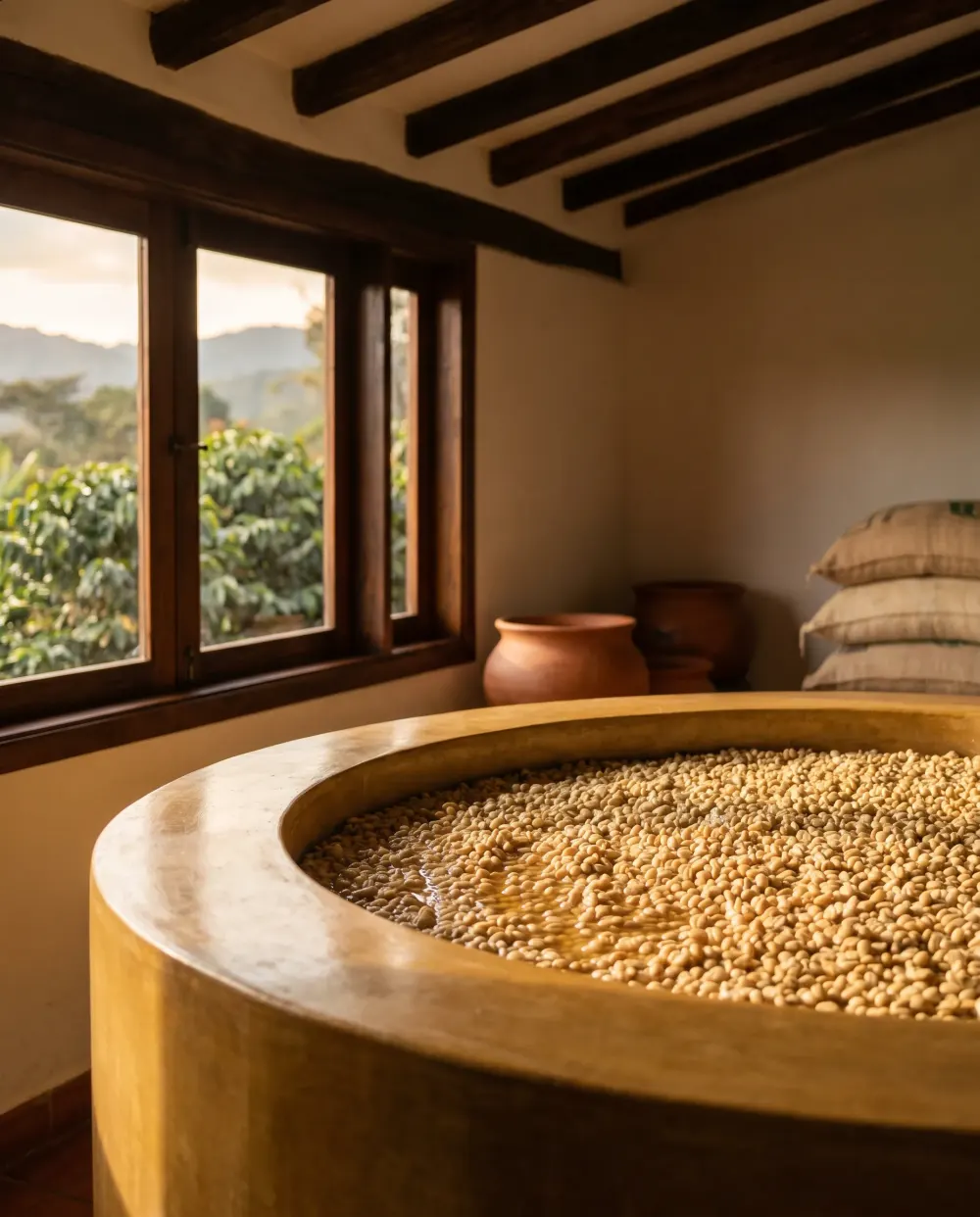 01
01After depulping, the beans rest 18 to 24 hours in tanks while the mucilage breaks down naturally.
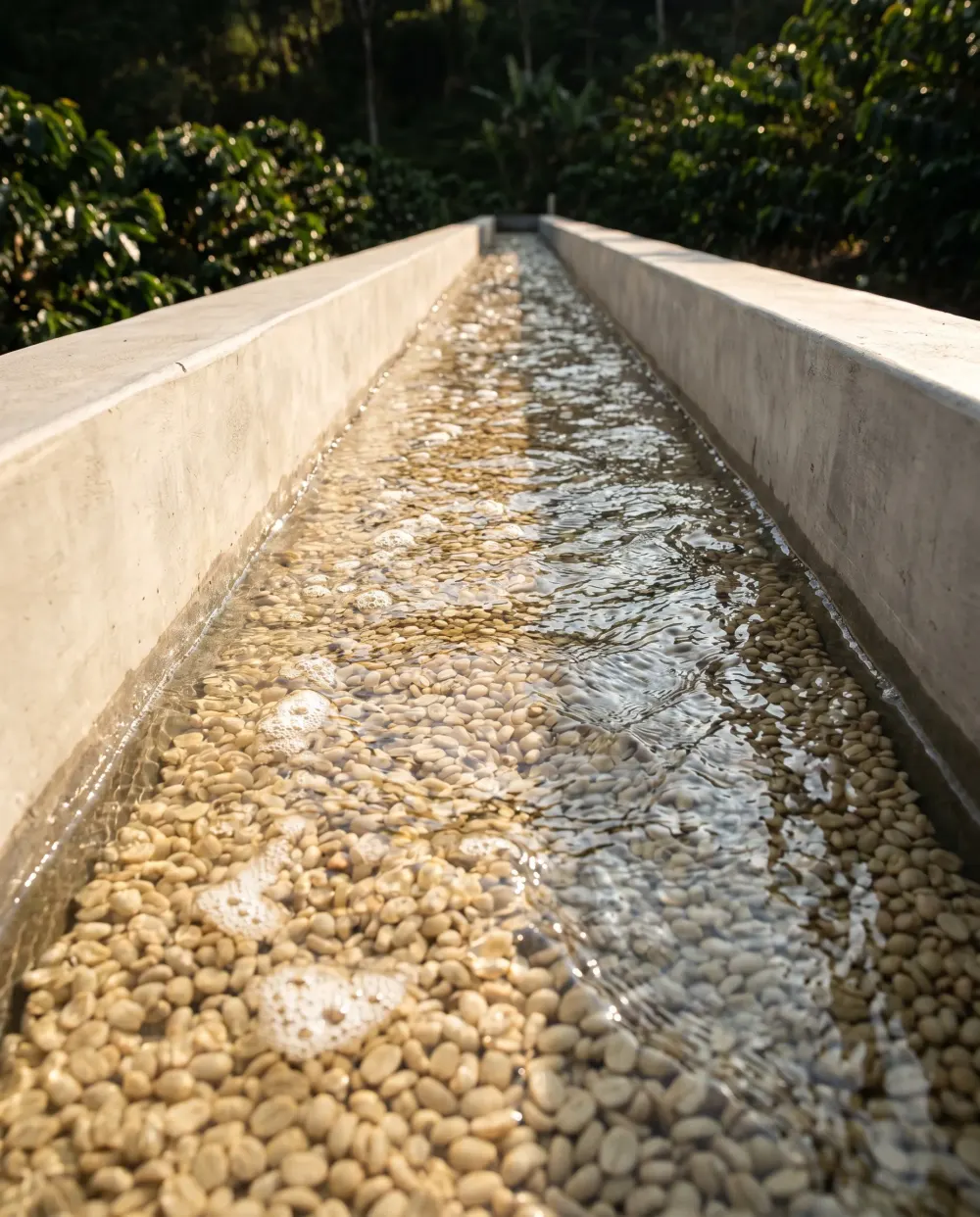 02
02The beans are washed in water channels: the densest sink and the lighter ones are discarded.
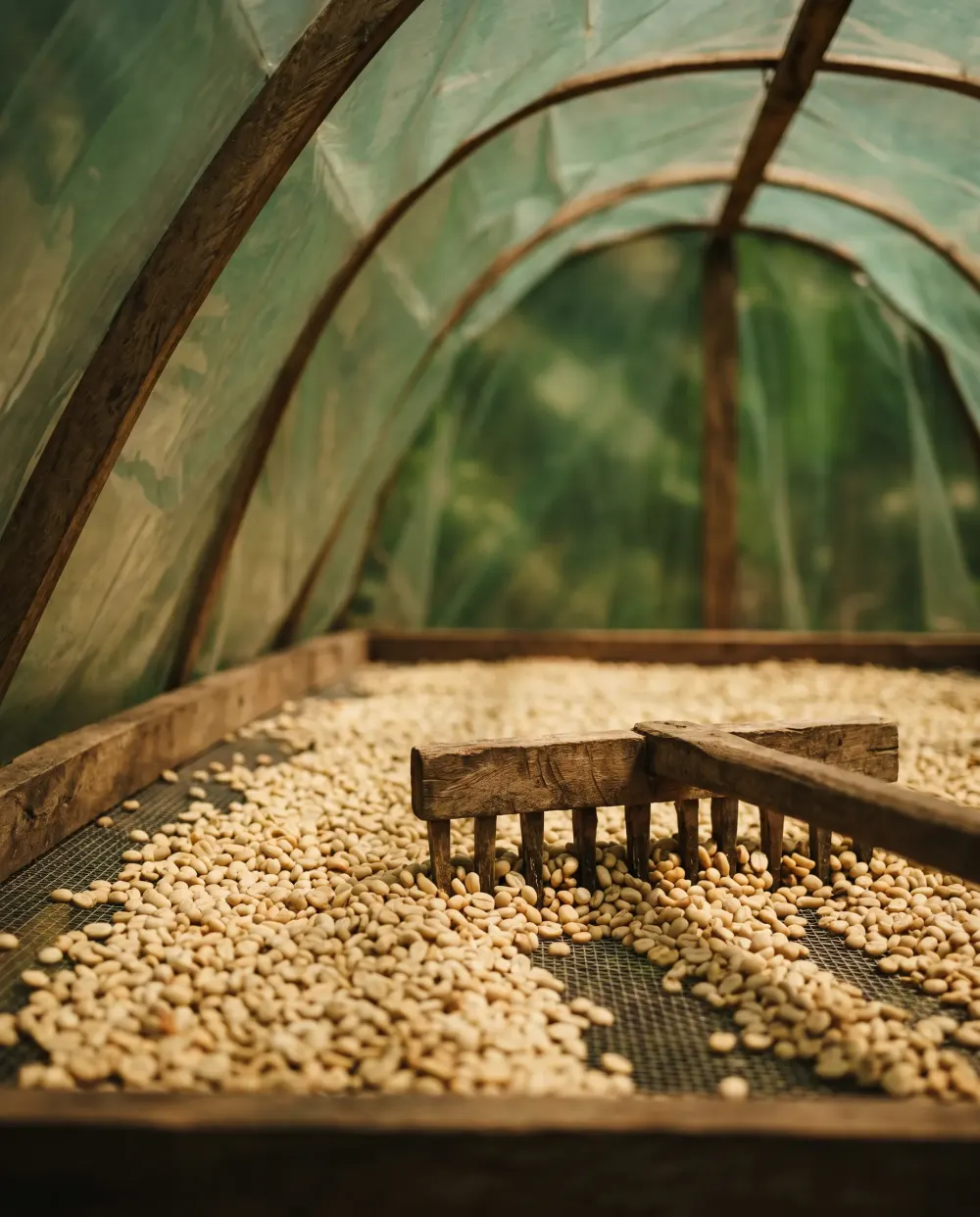 03
03The beans dry slowly in the marquesina until they hold just 10 to 12% moisture.
Natural
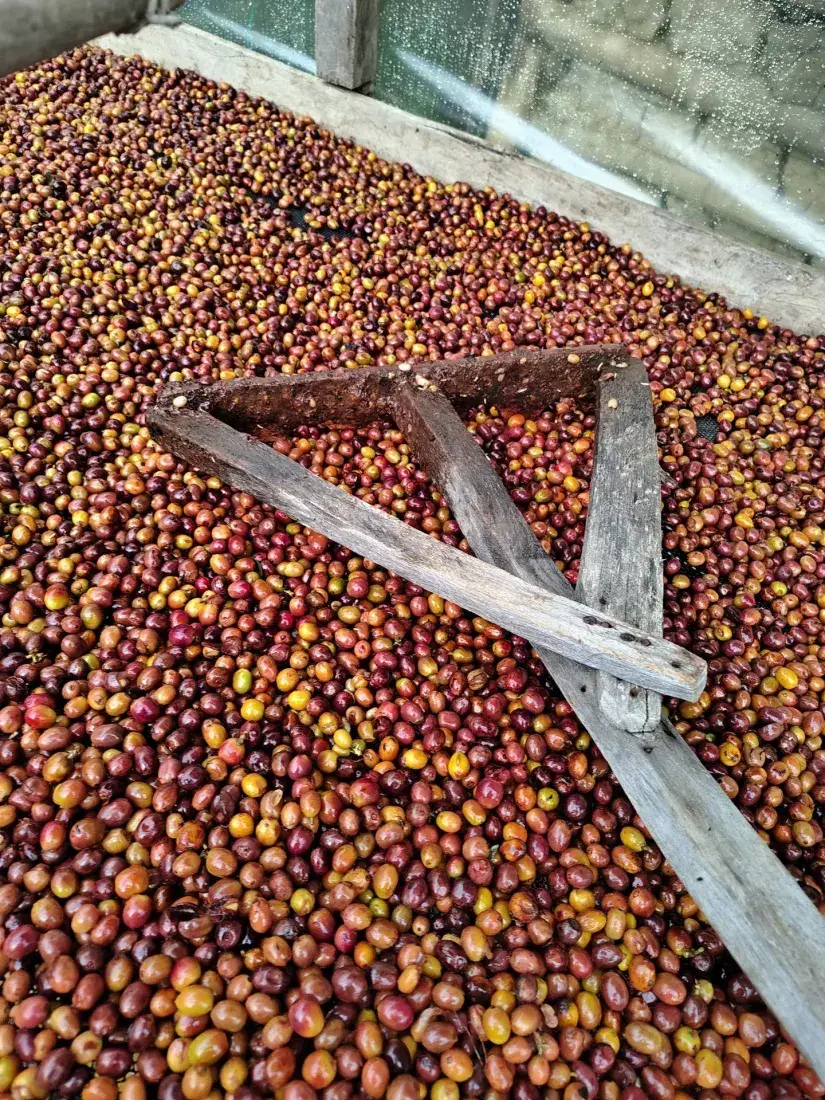
The natural process is the oldest of them all: the whole cherry dries in the sun, in marquesinas or on patios, for three to six weeks, and is turned every day so it dries evenly. Fermentation happens inside the fruit itself, where native yeasts and bacteria slowly work the pulp's sugars into the bean.
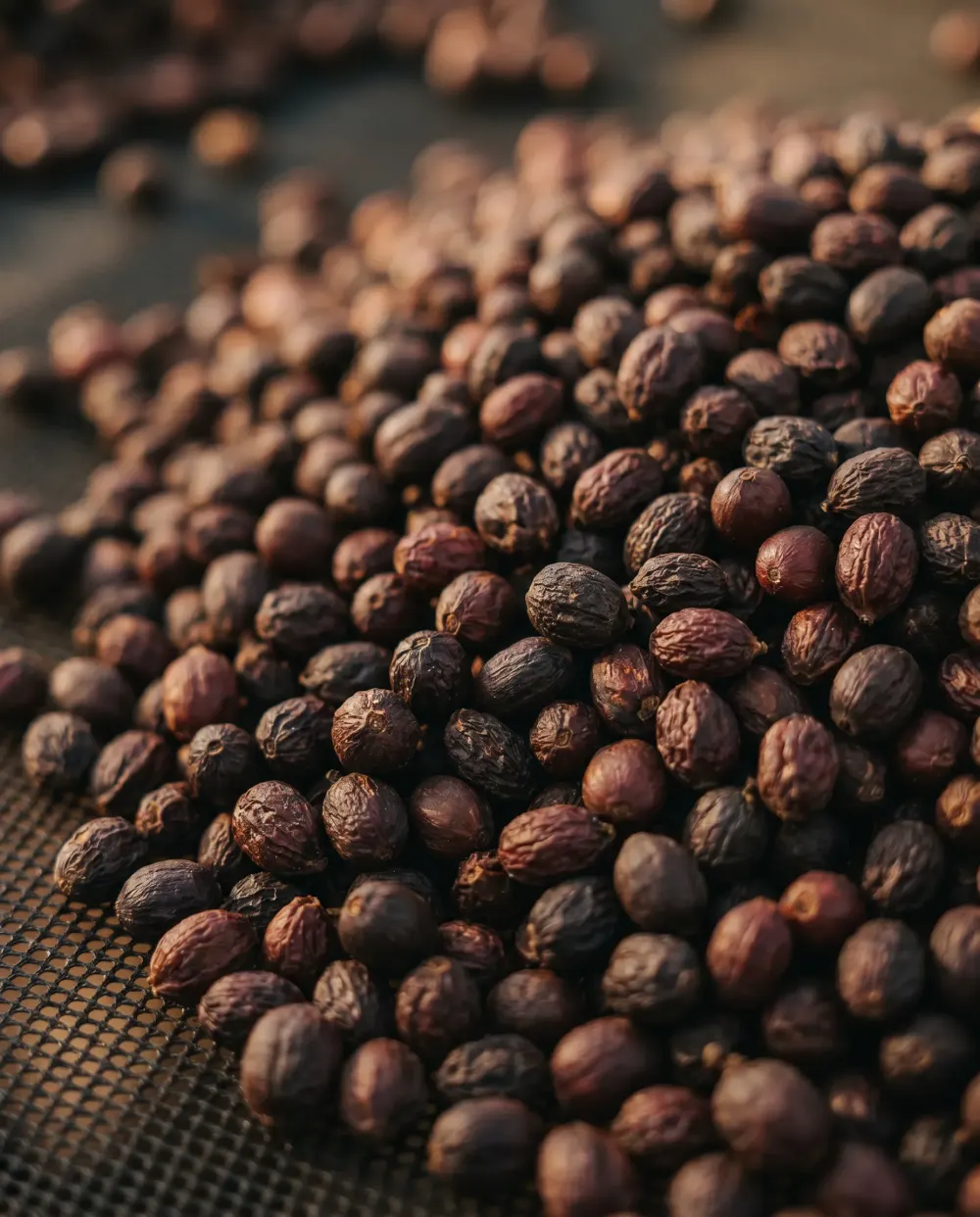
As it dries, the cherry turns from bright red to brown and finally almost black, wrinkled like a raisin. The dried husk is then removed to reveal the green bean. The cup is clearly fruity and wine-like, with red-berry notes, heavy body and gentle acidity.
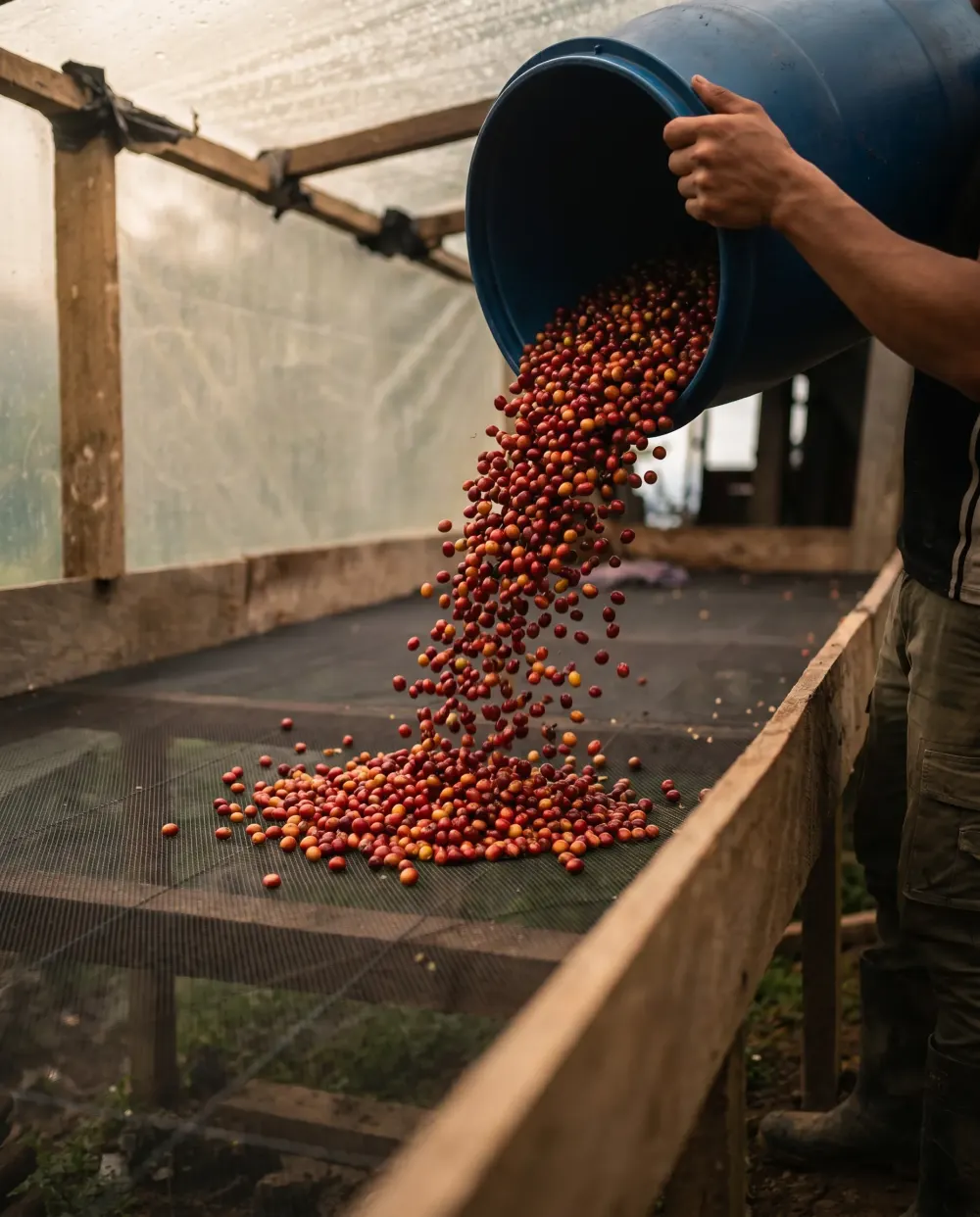 01
01Whole cherries are spread out in the sun, and fermentation happens inside the fruit itself.
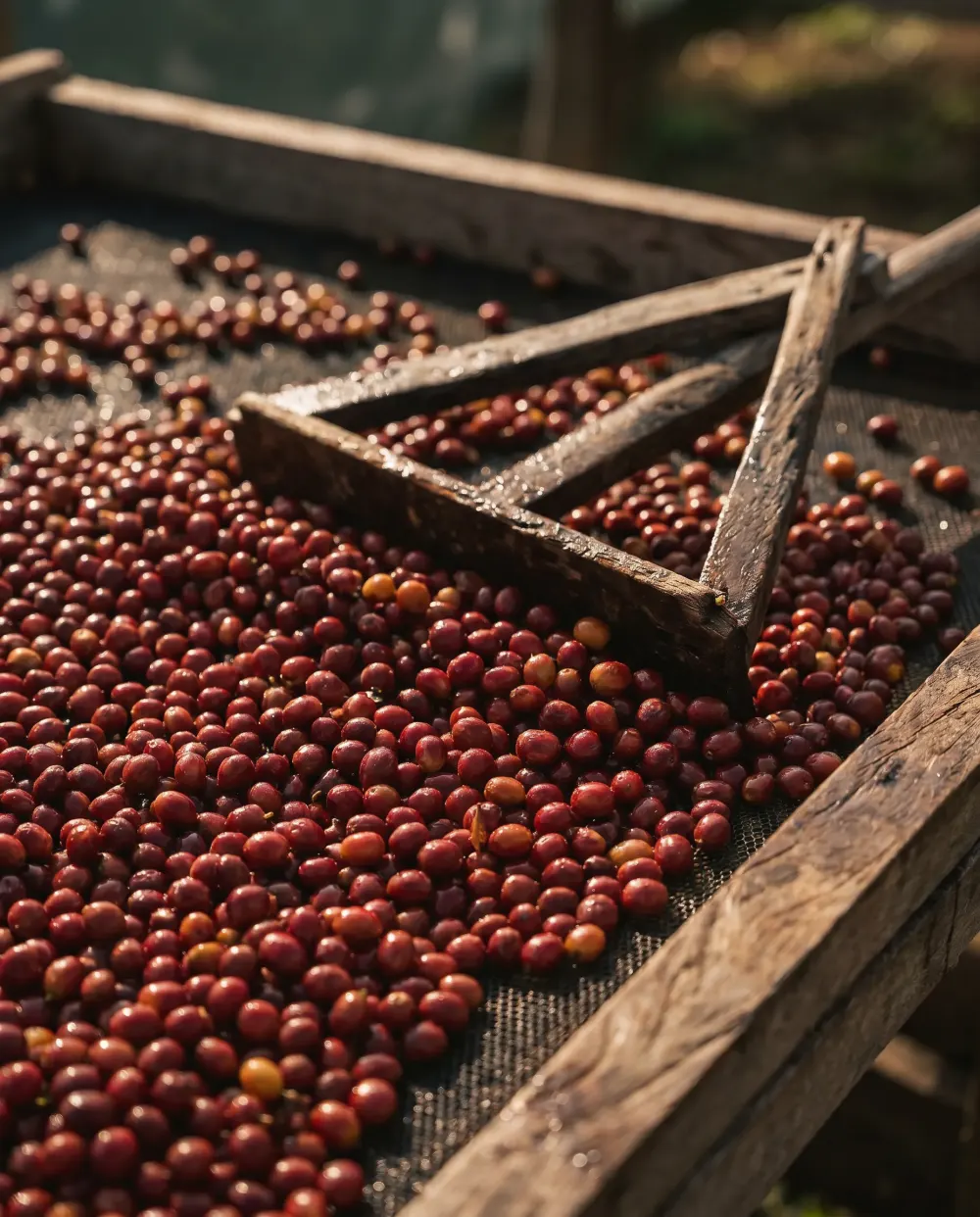 02
02The cherries are turned every day for 3 to 6 weeks to dry evenly.
 03
03The dark, raisin-like fruit has its dried husk removed to reveal the green bean.
Anaerobic
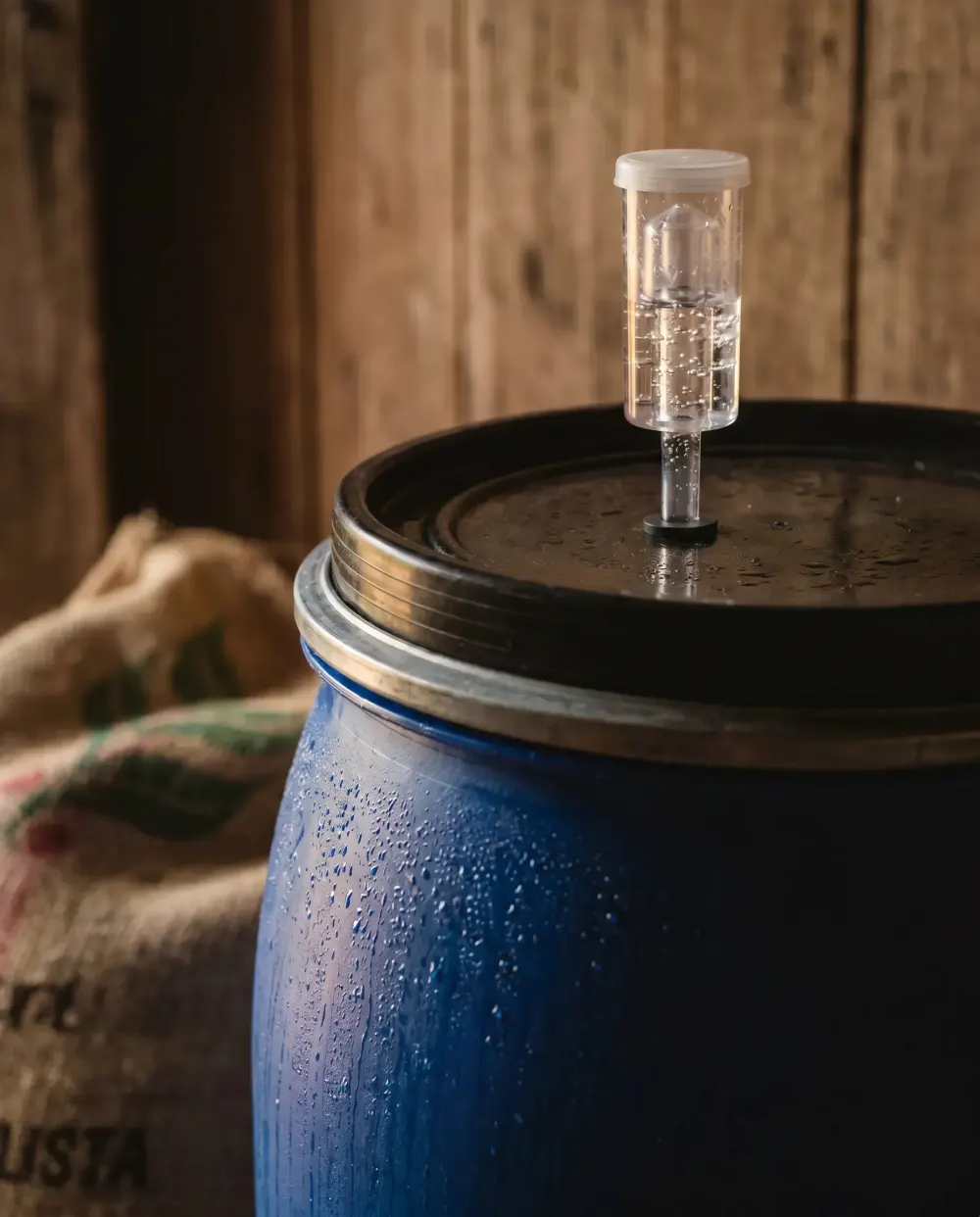
In anaerobic fermentation, the cherries, whole or depulped, are sealed in plastic barrels fitted with a one-way valve that lets CO₂ escape while keeping oxygen out. Without oxygen, the microbes ferment the fruit in a very different way, and the process is followed closely by measuring pH and temperature.
That more intense fermentation develops fruity, boozy and complex flavors that are then locked in as the coffee dries. It is the most experimental method of all and can completely change the character of the very same bean.
 01
01Cherries are sealed in plastic barrels, and a one-way valve vents CO₂ while keeping oxygen out.
 02
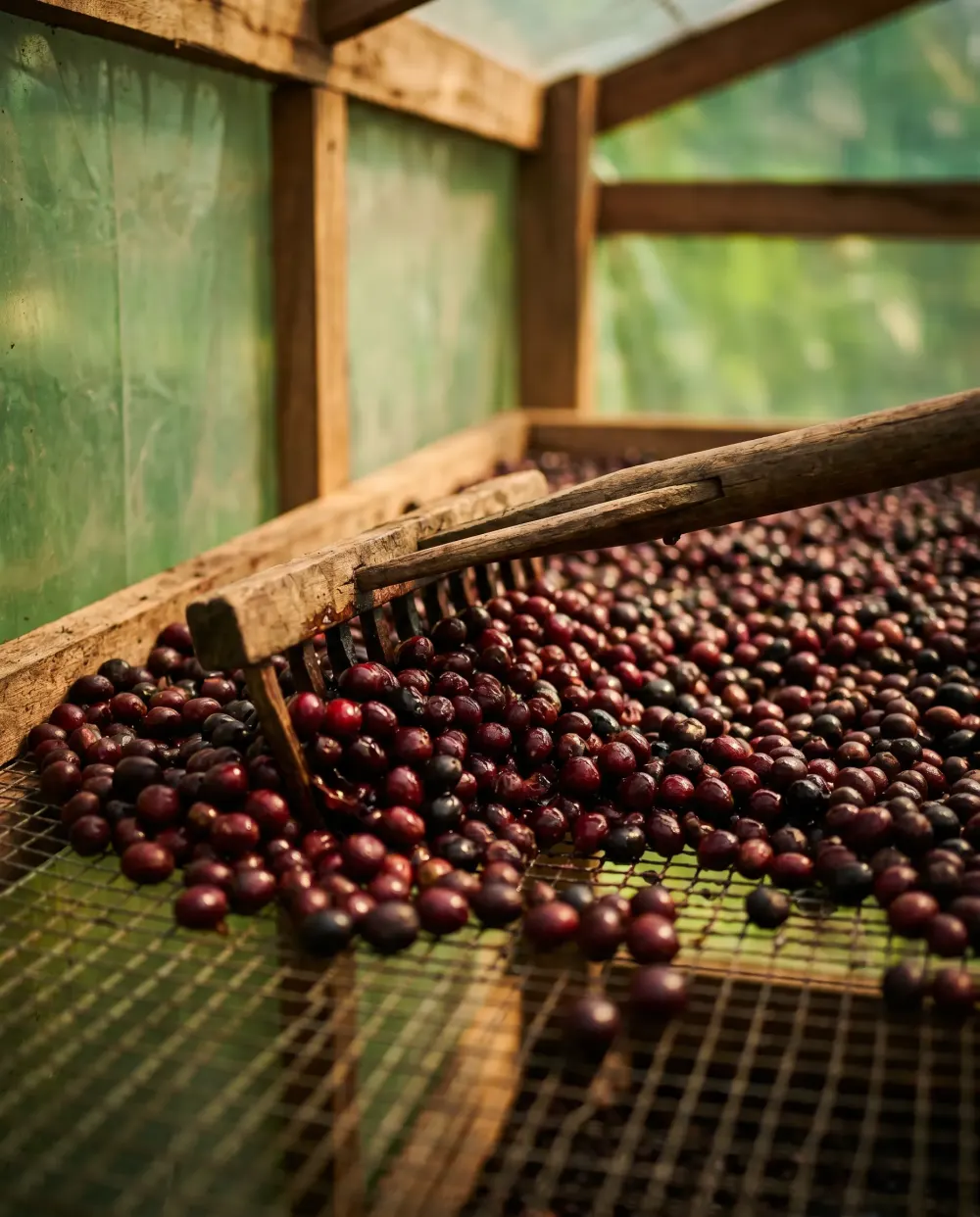
02After fermentation, monitored for pH and temperature, the lot moves on to drying.
 03
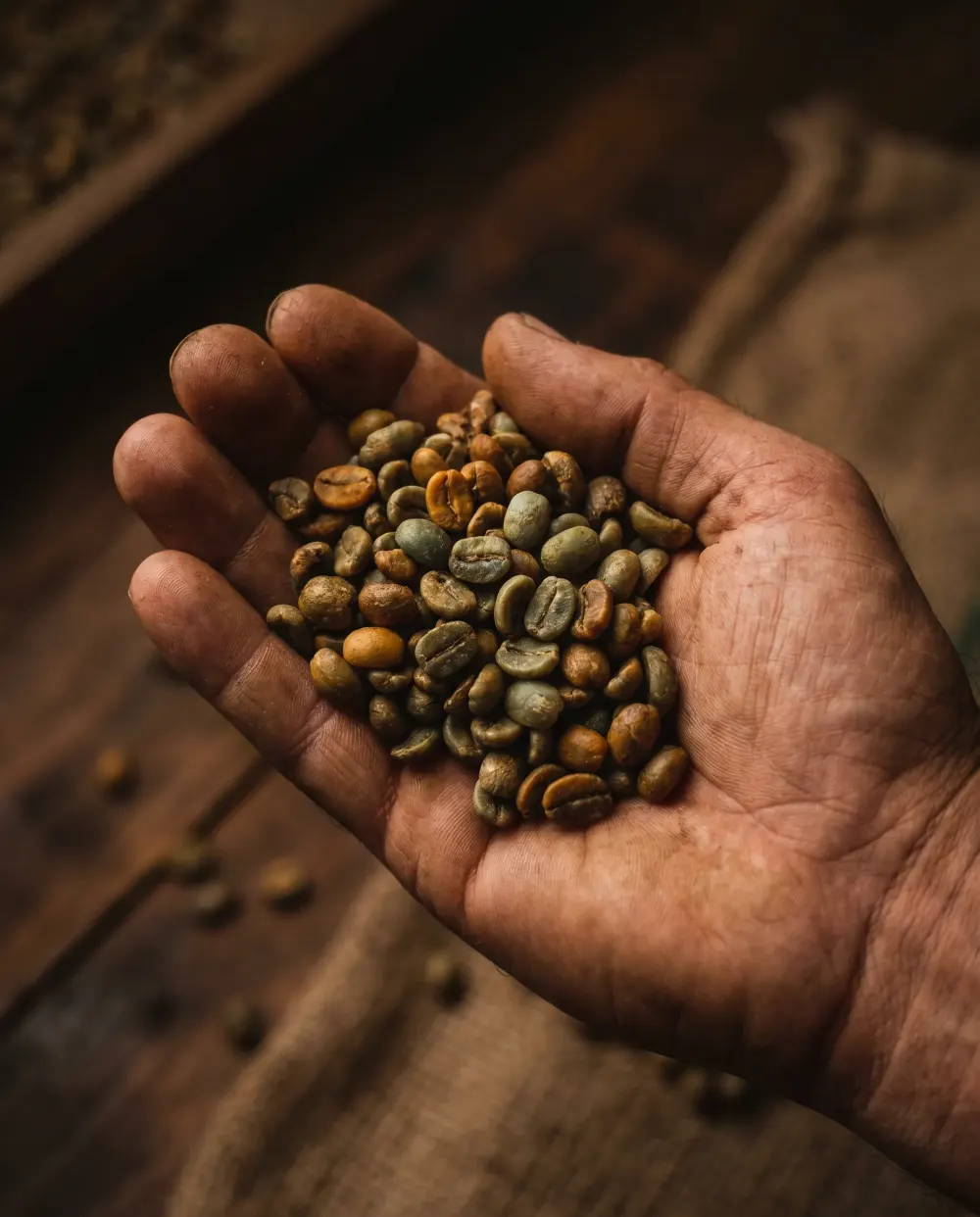
03The resulting bean carries the intense, complex profiles developed in the barrel.
Co-Fermented
Beyond the four classics lies a newer frontier: co-fermentation. Here the beans do not ferment alone: they share the barrel with mosto, the sweet, wine-colored juice that fresh coffee cherries release when their skin and pulp are removed. Just as a winemaker works with grape juice, the producer lets the mosto feed the fermentation, and the beans soak up part of its sugars and aromas while they rest.
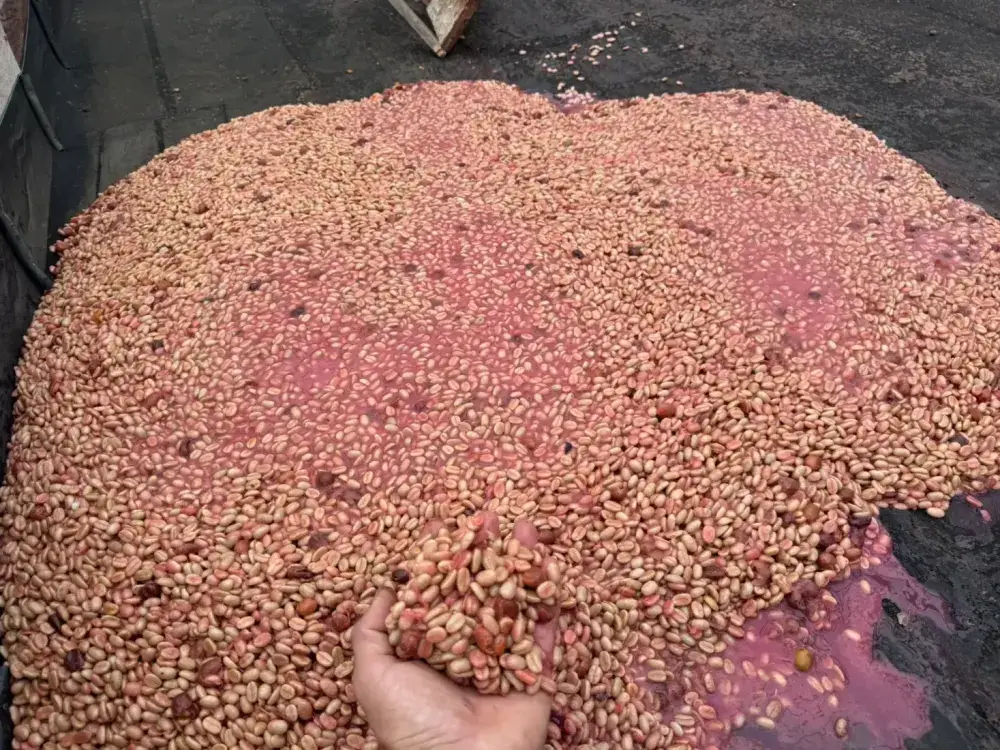
Everything that enters the barrel is coffee and nothing else: no fruit, no spices, no flavorings. That is the same standard the Cup of Excellence, the most prestigious competition in coffee, sets for its experimental category. The juice of expressive varieties such as Papayo and Pink Bourbon can lift a hardy everyday variety like Catimor into something far more aromatic, and the process signs its work in plain sight: beans that come out of the barrel tinted pink.
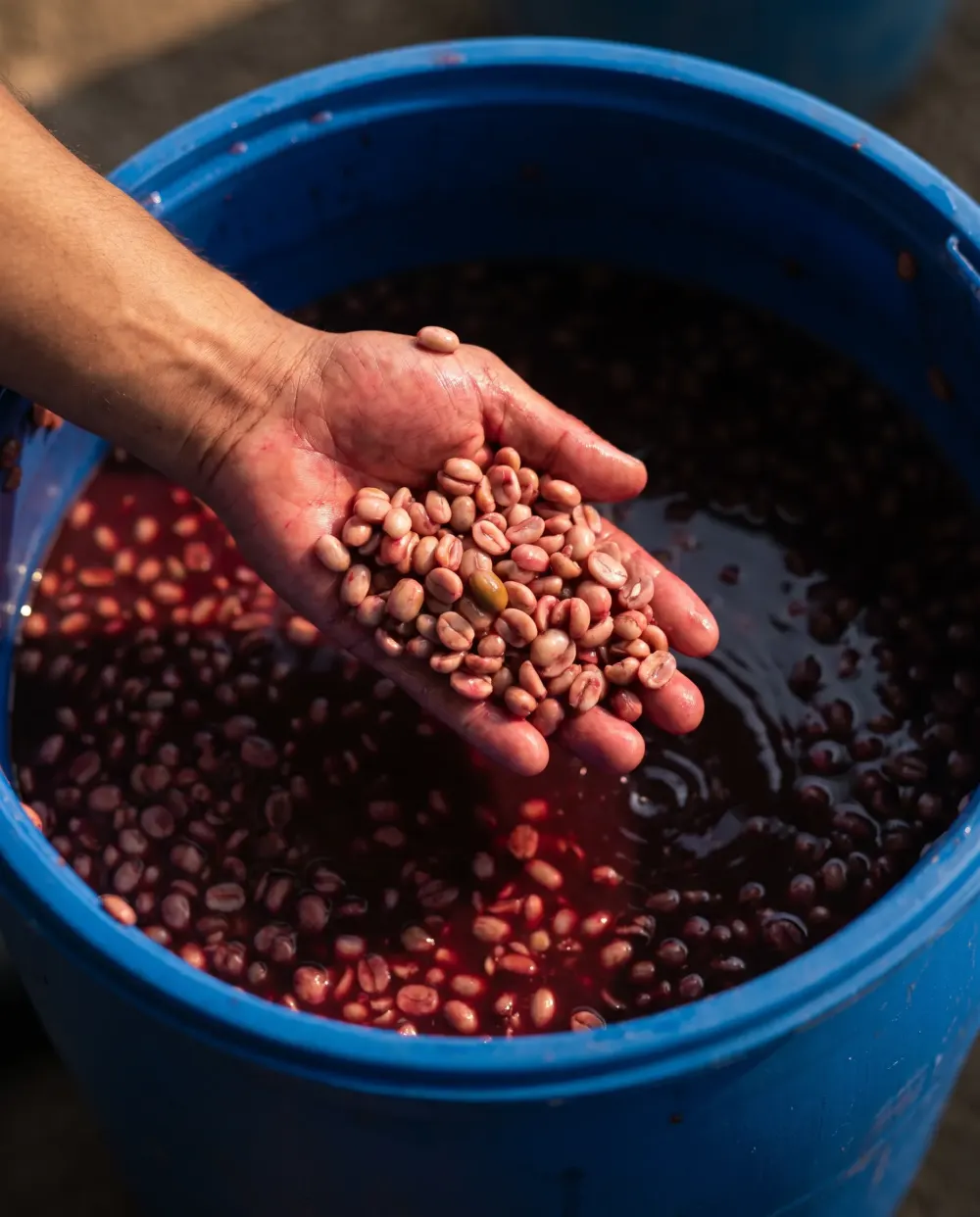 01
01The beans rest in blue barrels, fully covered by the sweet mosto, soaking up its sugars and aromas while temperature and acidity are closely watched.
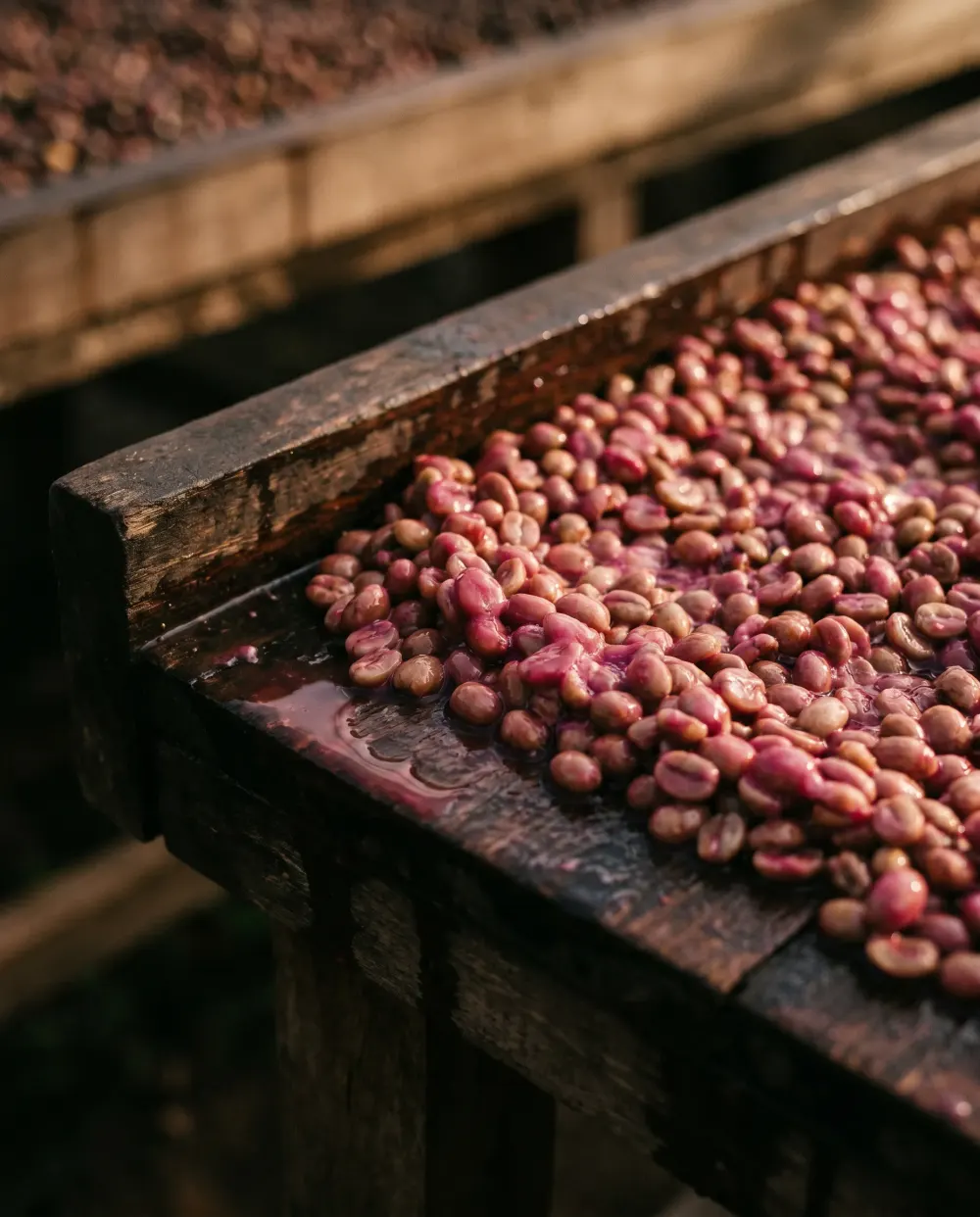 02
02Straight from the barrel, the beans reach the drying beds still vividly pink from the juice.
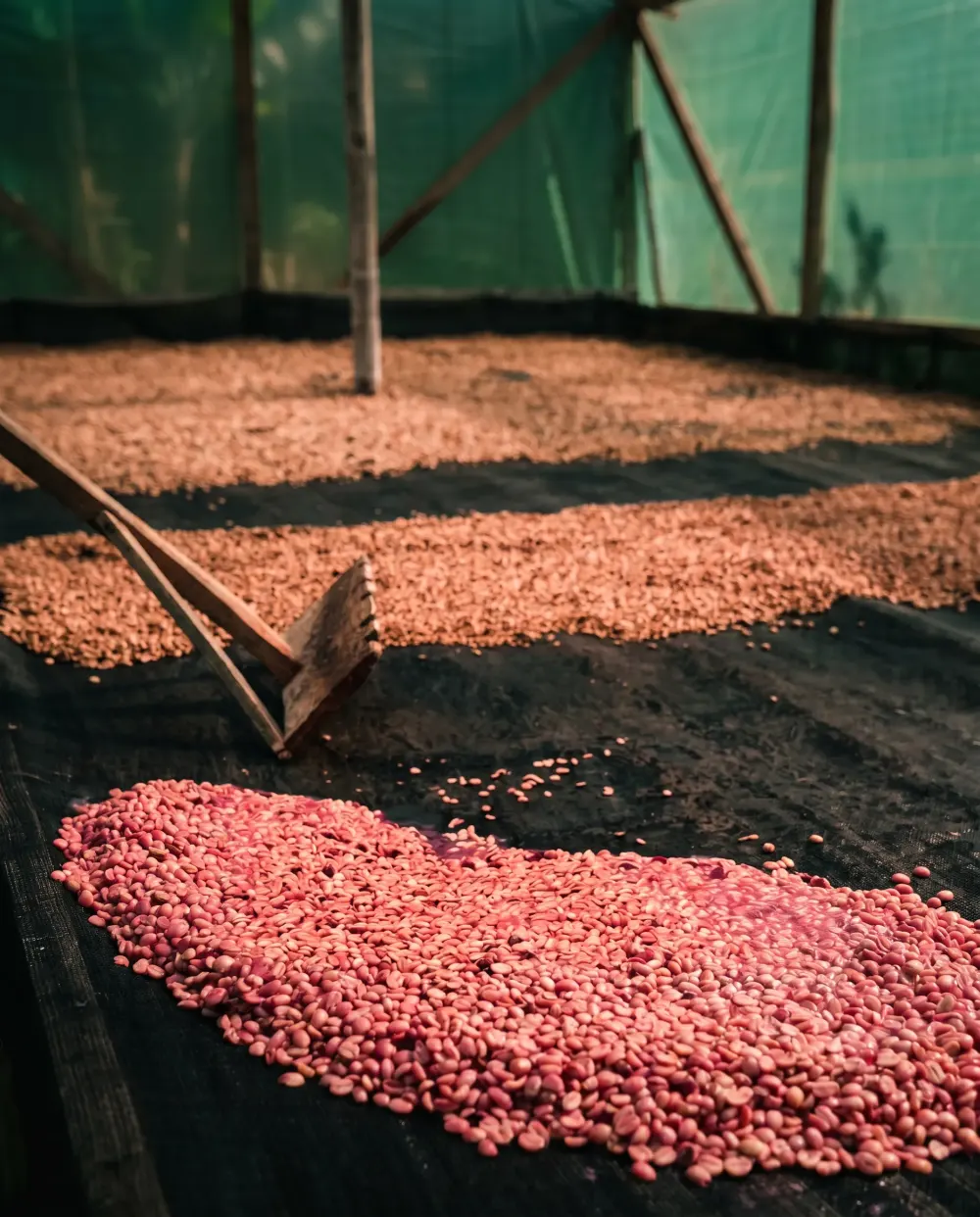 03
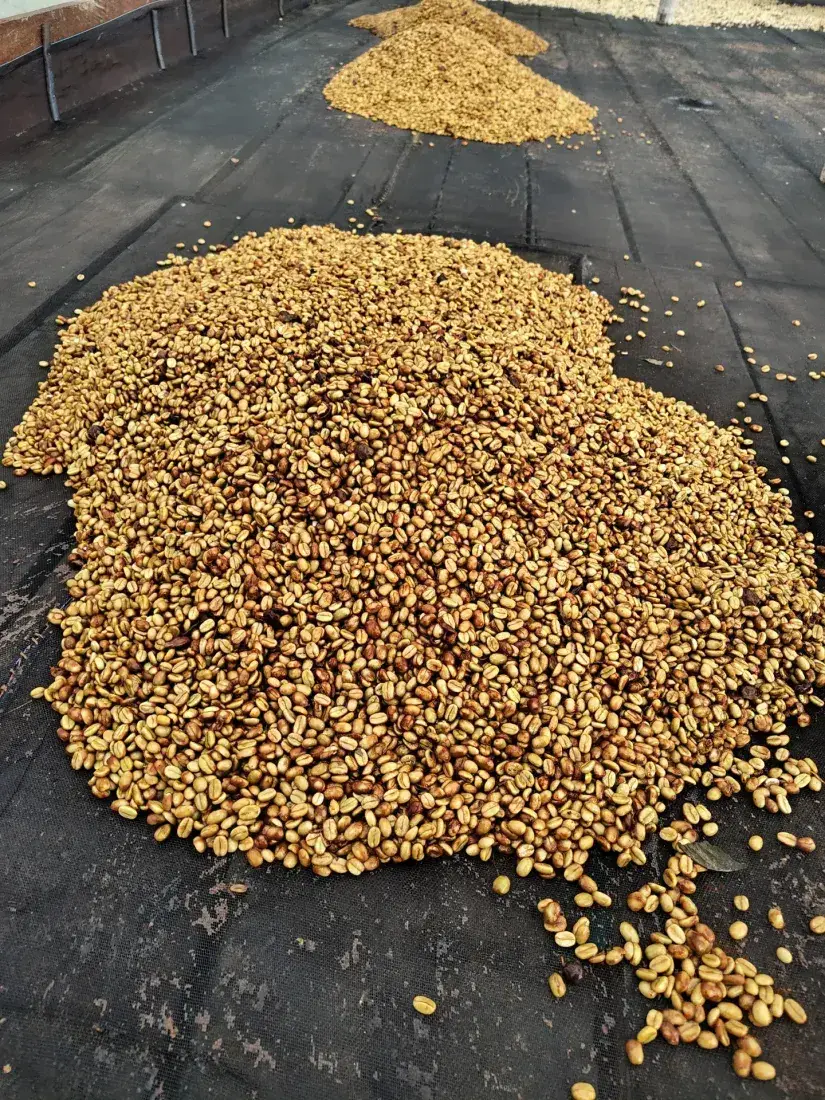
03As the beans slowly dry, the pink softens into a warm rosy tan, and the aromas they absorbed stay sealed inside.
Moments from Our Partner Farms
scroll to explore